
Human progress today is measured in the staggering growth of global GDP, in billions lifted from poverty, and in a planet more connected than ever.
Yet, beneath these metrics lies an older truth: power and money remain the primary forces determining who benefits from this progress, and at what cost.
The world is not run by a single hand—it is a mosaic of many hands, each pulling, pushing, and weaving.
Power is not a straight line but a network, where influence is bargained for, traded, and sometimes quietly withdrawn.
The Players
Industrialists & Corporates — The architects of wealth and arbiters of the market. They build global supply chains, fund innovation, and create employment at scale. Their influence extends beyond commerce; they lobby for favorable policies, shape public narratives, and steer societal priorities, forever balancing the drive for progress with the pursuit of profit.
Managers & Executives — The organizational navigators who turn strategy into action. They coordinate teams, optimize systems, and allocate resources. While often invisible to the public, their decisions determine the functional effectiveness of every institution.
Politicians — The public power-brokers. By setting policy, allocating public funds, and forging the laws that govern society, they translate the will of the people into tangible action. Operating in cycles of elections and headlines, they thrive on alliances, rivalries, and optics. They are masters of timing, perpetually balancing the theatre of the public stage with the quiet negotiations of closed rooms.
Technologists & Platform Owners — The new architects of reality, a relatively new but increasingly dominant force in the machine. Coders, designers, and data brokers who are quietly rewriting the rules of power. Their algorithms shape not just economies but attention, conversation, and thought, curating what the world sees, hears, and believes.
Media Houses & Journalists — The curators of the public narrative. They frame how society interprets the world, deciding what is amplified and what is buried. Their traditional role as gatekeepers has been challenged and reshaped by the rise of platform owners, forcing them to alternate between serving as watchdogs of democracy and echo chambers for the powerful.
Bureaucrats — The steady hands of the state. Rule-bound and process-oriented, they are the guardians of continuity. Often criticized for their deliberate pace, it is their procedure that provides stability and prevents systemic collapse.
Judiciary & Legal Professionals — The interpreters of the rulebook. As the final line of arbitration, their decisions can alter the destiny of nations. For instance, a single landmark ruling on data privacy or civil rights can redefine the boundaries for Technologists and the Public alike. Yet, they operate within the strict confines of law, precedent, and the subtle pressures of their time.
Scientists & Researchers — The seekers of truth. With curiosity as their compass, they push the boundaries of knowledge. The development of vaccines is a prime instance where their work, funded by governments and distributed by corporations, directly altered the course of society. Their discoveries hold the potential to heal or harm, depending on the hands they fall into.
Doctors & Healthcare Professionals — The frontline guardians of human life. Their work to save, treat, and prevent directly impacts a society’s well-being and resilience. Though often constrained by immense pressure and limited resources, they remain indispensable.
Academics & Universities — The custodians of knowledge. As the slow-burning flame of learning, they shape generations of thinkers and leaders. Their challenge is to maintain relevance in a world that often moves faster than scholarship.
Activists, NGOs & Social Reformers — The conscience of society. Through protest, petition, and advocacy, they push the world toward justice. Sometimes celebrated and sometimes silenced, their work is a constant force for unsettling the status quo.
Religious & Spiritual Leaders — The voices of faith and meaning. They anchor millions by offering moral frameworks, comfort, or zeal, subtly shaping both culture and politics.
Military & Police Forces — The enforcers of order. As holders of the state’s monopoly on force, they are the guardians of sovereignty. Often invisible until a crisis, they act as protectors of the peace or instruments of authority.
Workers & Laborers — The silent backbone of the system. Farmers, drivers, nurses, and factory workers—they are the hands that build and maintain the world. Their collective power has ebbed and flowed throughout history with the rise and fall of unionization and the gig economy, yet their labor remains essential to every decision made.
The Global Players — The transnational forces. Supranational bodies, rating agencies, and global markets whose decisions ripple across borders, moving currencies and shifting the fortunes of entire nations with no single allegiance.
The Public — The collective force. Through voting, consuming, protesting, and sharing, the public participates in this intricate web. We are not merely spectators but active players, shaping and being shaped by the system, even when we feel powerless.
How the Players, Money, and Power Mix
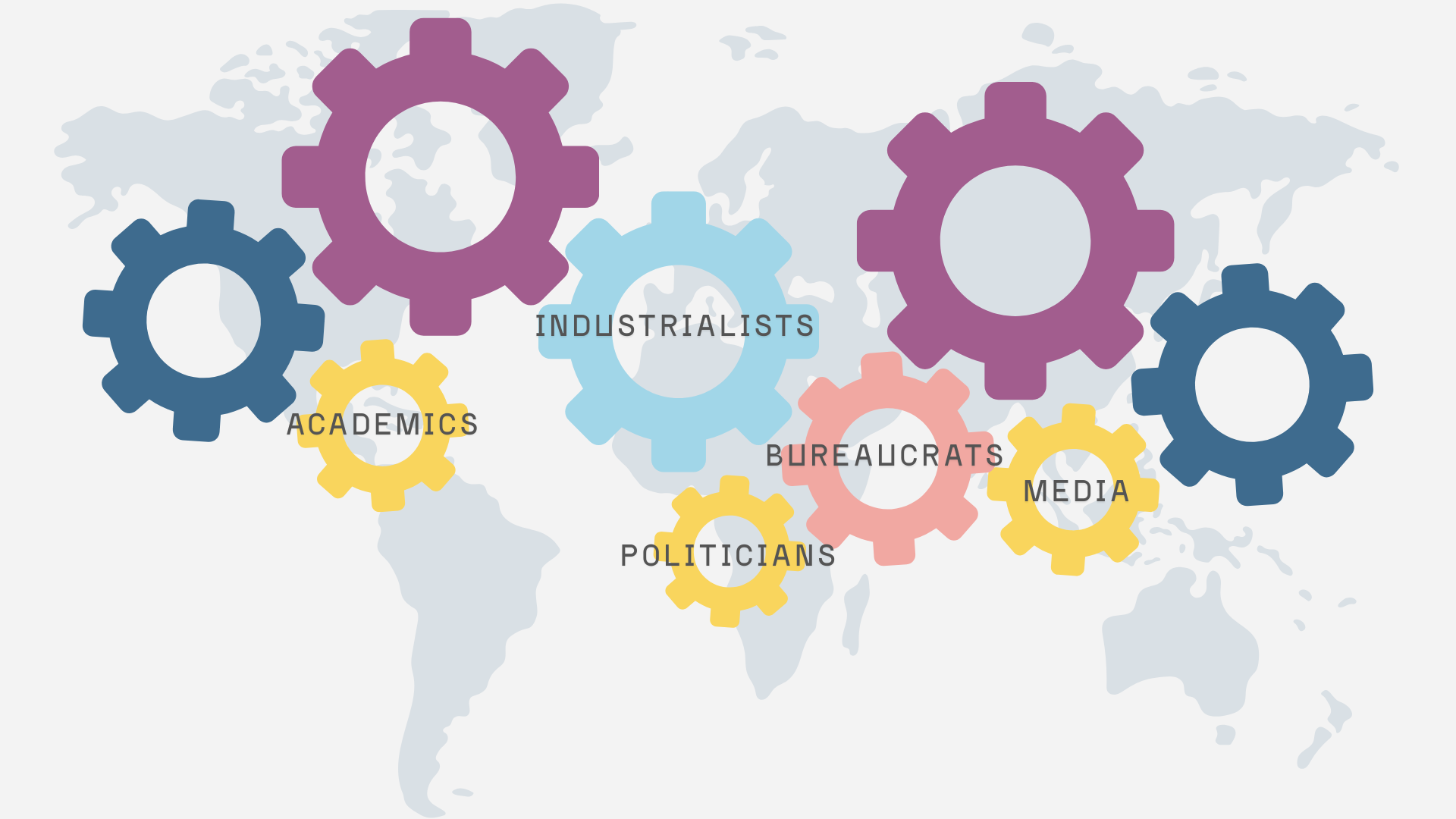
Think of society as a giant machine. The people and groups we’ve talked about are its gears, and they don’t turn on their own. How they push against each other, work together, and depend on one another is what makes the machine run. Here are some of the key matchups:
- Money vs. Morals: This is the classic fight between making a profit and doing what’s right. Big companies often want to cut costs to make more money, but activists and the public push them to protect the environment and treat workers fairly.It’s a constant tug-of-war over what’s more important: growing the economy or sticking to our values.
- New Tech vs. Old Rules: This is the race between fast-moving technology and the slow-moving government. Tech companies create amazing new things like AI and social media almost overnight. But it takes politicians a long time to create laws to make sure these new tools are used safely and don’t cause harm. It’s like trying to write traffic laws after super-fast cars are already on the road.
- The Strings Attached to Money: People with a cause, like activists, often need money from wealthy people or big companies to get their message out. But this help can come with a catch. The person with the good cause might have to soften their message to keep their funder happy. Or, the funder might use them as a puppet to look good, blurring the line between helping a cause and controlling it.
- Official Story vs. Public Voice: This is the battle over who gets to tell us what’s happening. In the past, major news outlets controlled the story. Today, with the internet, everyone has a microphone. This allows regular people to challenge the official version of events, but it also creates a lot of confusing “noise,” making it hard to know who to believe.
This is the machinery of the modern world—neither good nor evil, but endlessly human. It is a system where power is negotiated daily, where no single player holds all the strings, and where progress is forged not in a straight line, but in the constant friction between these competing forces.
Leave a Reply